


Beliefs Are Tools, Not Truths
In 2016, we were tied with the Denver Outlaws when John LoCascio stripped their best midfielder.
John played at Villanova and went on to become a teammate of mine with the Rochester Rattlers in the MLL. He was one of the best poles I ever played with. He came off the field, ran into the huddle, and yelled, “I’m the best player on this field!”

I’ve never forgotten it. Was it objectively true? Probably not, given the talent on that field. But that didn’t matter. What stood out was how clearly he believed it.
Many great players don’t talk like that out loud. They’re humble in interviews and quick to credit their teammates. But I’d bet that if you could hear what they say to themselves, a lot of them would sound like John.
So what are you telling yourself?
Every Ground Ball Is Mine
John wasn’t the first player I saw do this.
Joe Meurer shared backyards with me growing up, and I looked up to him a lot. In 2010, Joe won the C. Markland Kelly Award as the best player in Maryland. He was a long stick midfielder at McDonogh and went on to a great career at Ohio State.
When we were in high school, he told me his mindset on the wing was simple: every ground ball is mine.

Joe Meurer
Obviously he didn’t come up with every ground ball. But he came up with a lot of them, and I think that belief had a lot to do with it.
Beliefs as Tools
So what does this mean for the rest of us?
Everyone carries beliefs about who they are and what they can do. We usually don’t choose them. They come from a coach’s comment, a tough game, getting cut, or just growing up. Over time, they become the lens we see ourselves through.
I heard a line a while back that I think about a lot: you probably won’t outperform your belief system. If you don’t think you have a chance, you play it safe. You go after the ground ball a half step slower.
Nir Eyal, a bestselling author who writes about why people do what they do, puts it this way: beliefs are tools, not truths. It’s the title of the first chapter of his new book, Beyond Belief.
Instead of asking whether a belief is true, ask whether it’s helping you.
Not “Am I really the best player out here?” but “Does thinking that make me compete harder?”
You don’t have to prove a belief to use it, and you don’t have to say it out loud.
You’re Not Scoring On Me
I learned how this works as a defender.
When I was younger, I landed on a phrase that helped me when covering the ball: you’re not scoring on me.
Sometimes the guy scored anyway. That’s when it would have been easy to jog back thinking, “Okay, he can score on me,” and carry that into the next possession.
I tried to go right back to the same belief instead. Maybe that’s a little delusional, but it was useful. The goal he scored was done and the next one was still up to me.
The Right Tool for the Job
You may be thinking: can’t false beliefs be harmful?
100%. If “I’m the best player on the field” becomes your reason to coast at practice, it’s a cop out, not a belief that serves you.
John and Joe didn’t use their beliefs that way. They still showed up during the week and worked on what they weren’t good at.
Game-day beliefs are for performing. Practice beliefs are for improving. You need both.
And sometimes the useful belief is the honest one. At practice, that might sound like, “I’ve got work to do on my off hand.”
Try It Yourself
One tool we teach our athletes, and one I still use today, is self-talk: choosing how you talk to yourself.
The words should shift the way you feel. If you say “every ground ball is mine” and you don’t feel any more ready to go after it, it’s not the right phrase yet.
This week, ask yourself:
What do I tell myself before games, and right after a mistake?
Is that belief helping me play better, or just helping me feel better?
What could I tell myself instead that I can actually feel?
Try a few phrases out loud at practice. Keep the one that makes you stand a little taller.
Sometimes the most useful thing you can believe isn’t completely true.
Matt
Forwarded this email? You can subscribe here to stay in the loop 👍.

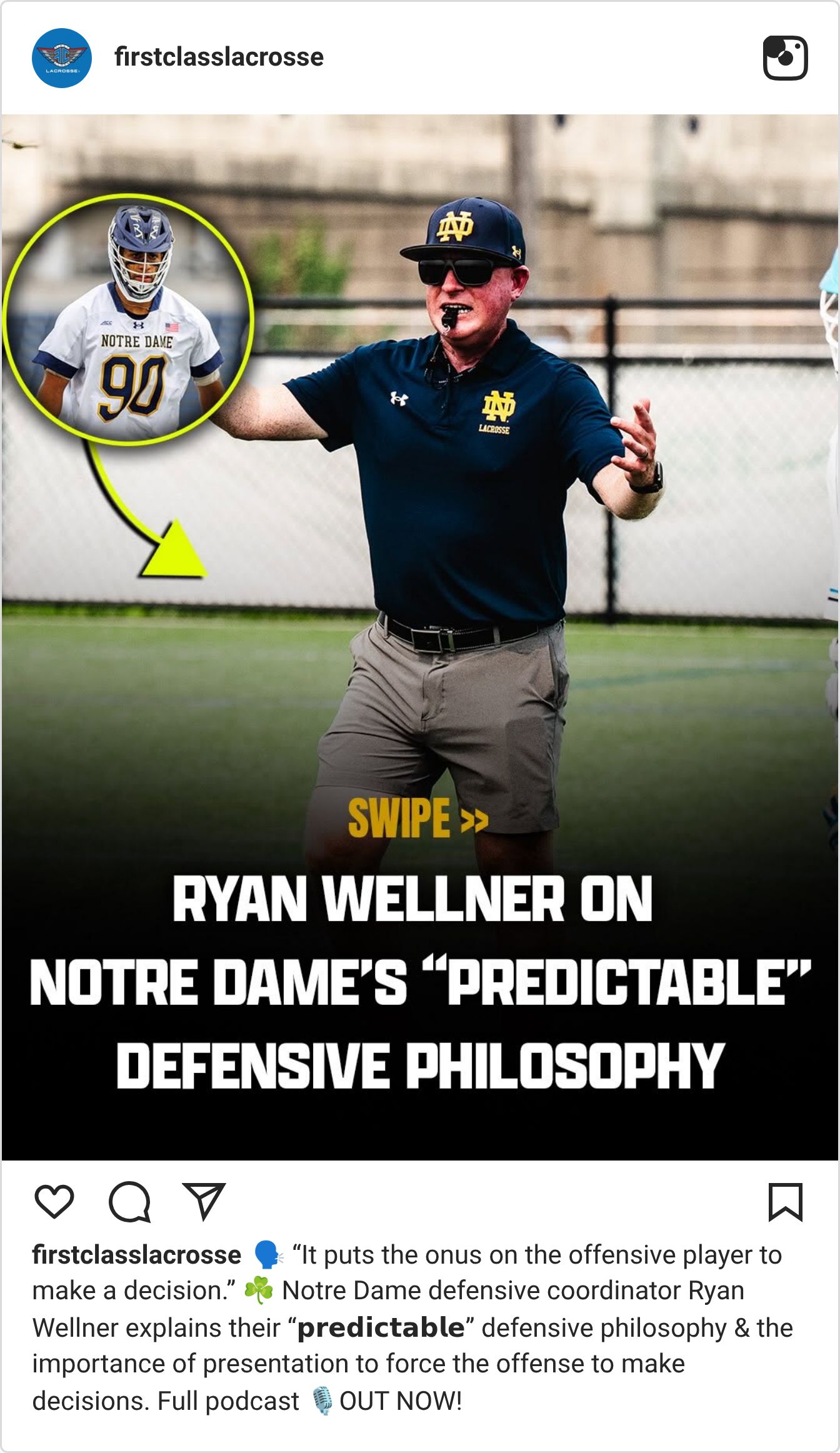
🎧 Ryan Wellner: Defensive Mastery and the Essence of Connection
Deemer Class and Matt Dunn host Ryan Wellner, Notre Dame’s defensive coordinator, to discuss his coaching journey and how he builds a consistently sound defense at one of the nation’s top programs.
Check out the clip below of Coach Wellner discussing Notre Dame’s “predictable” defensive philosophy and watch/listen to the full podcast wherever you get them!

📺 How To Catch and Throw a Lacrosse Ball (For Beginners)
If you’re brand new to lacrosse, there are two skills you need to learn first: catching and throwing.
In our newest video, Deemer Class walks through the proper way to catch and throw a lacrosse ball. It’s a must watch for newcomers and a great refresh for more experience players!
Watch on YouTube below! 👇

🚨 The Approach 2027 - REGISTRATION IS LIVE
The Approach is a two-day immersive FCL Defense training built for high-level boys’ & girls defenders.
This isn’t drills for the sake of drills. It’s a college-level defensive environment focused on how elite defenders think, move, communicate, and compete, with real connection between players and coaches.
More details:
📅 July 14–15, 2027 (Men’s)
📅 July 13–14, 2027 (Women’s)
📍Chase Fieldhouse - Wilmington, DE
Registration is officially LIVE.


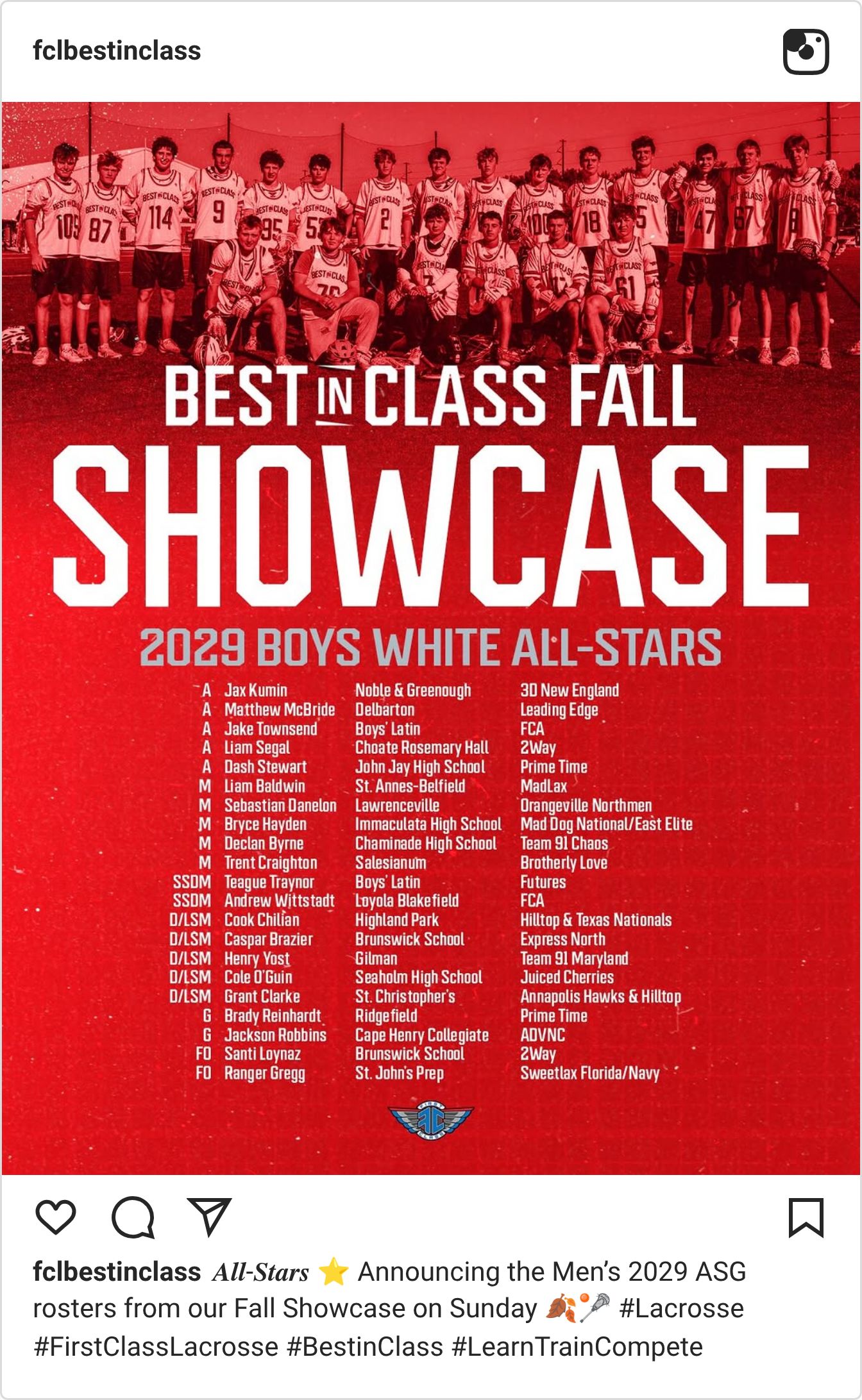
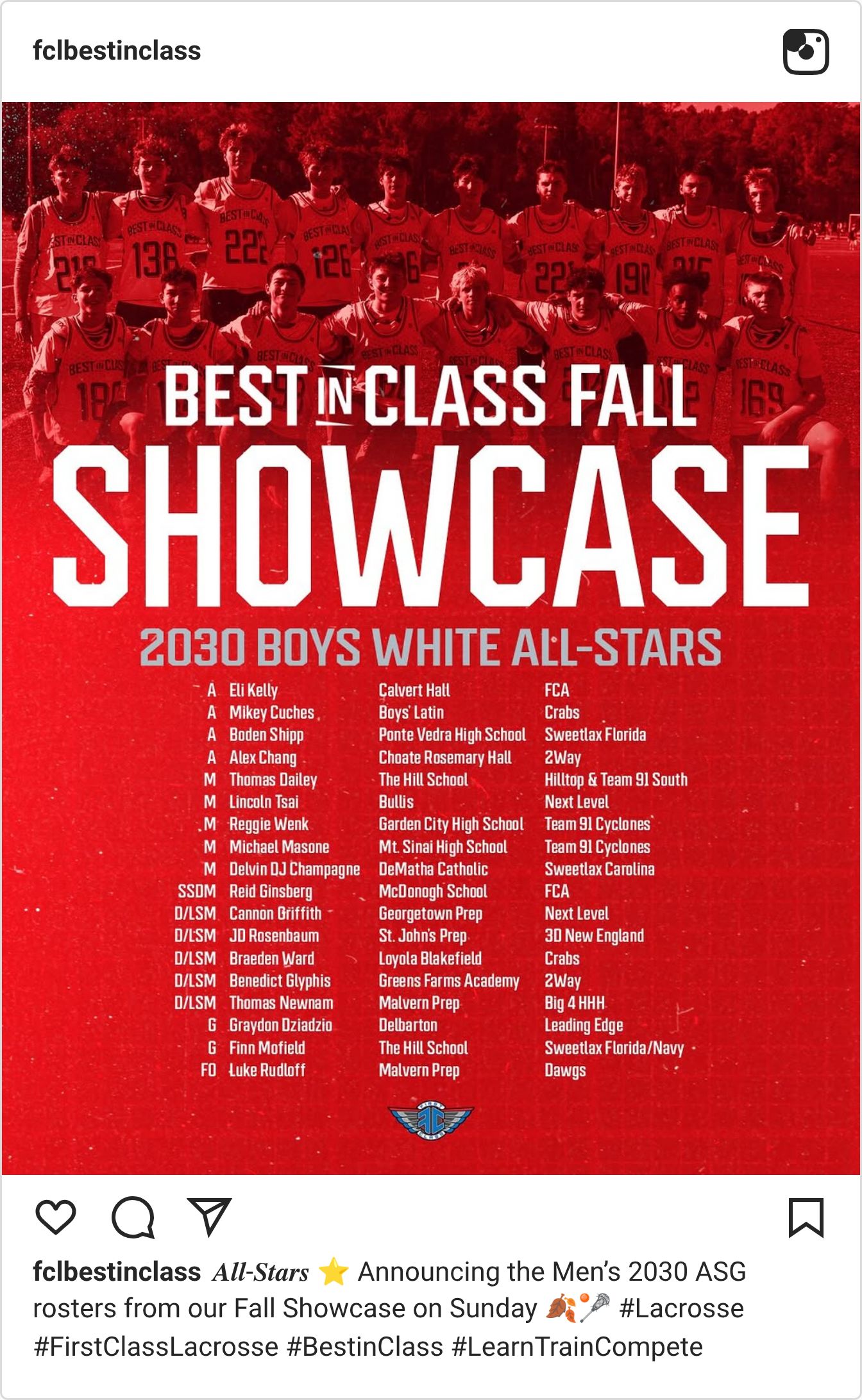
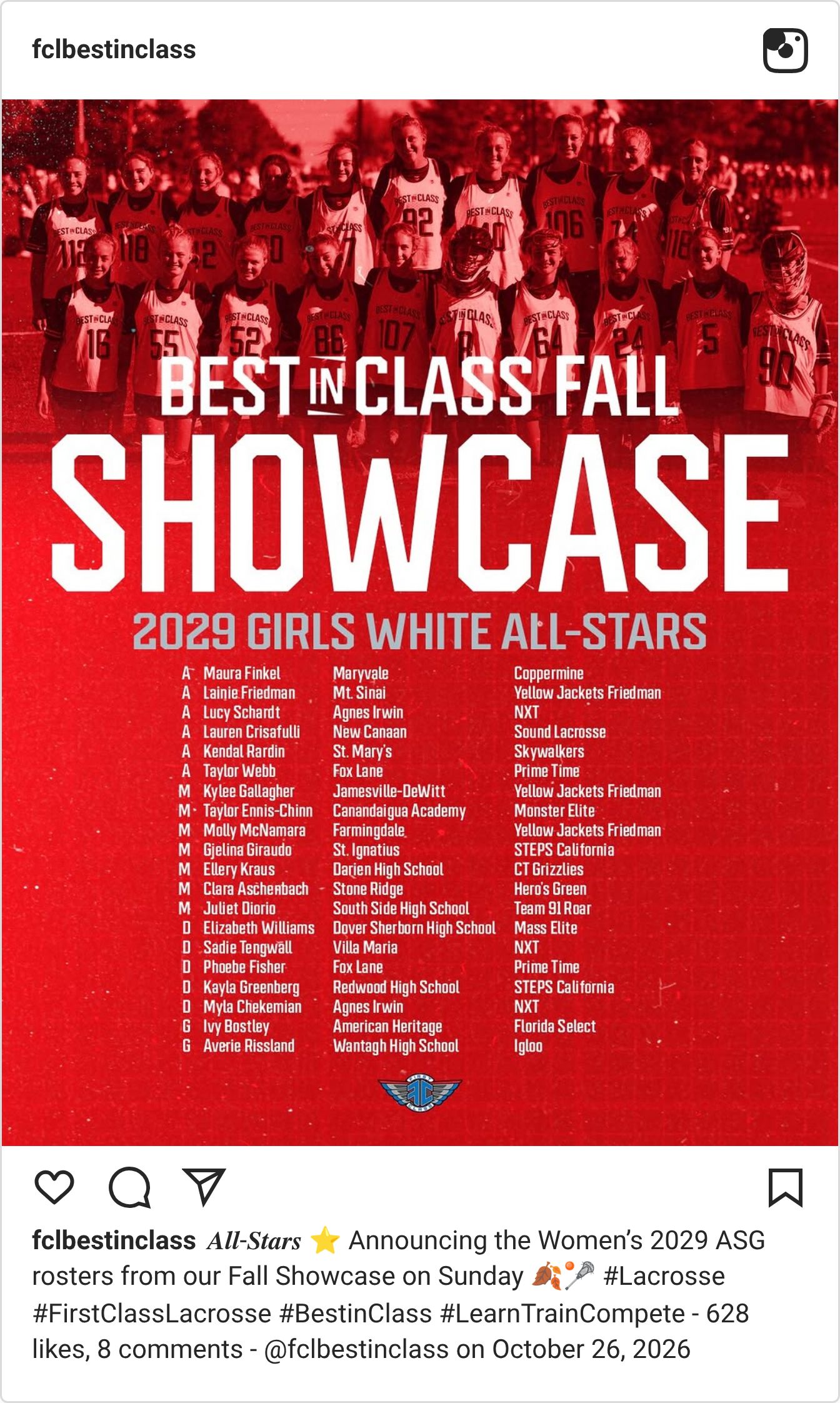
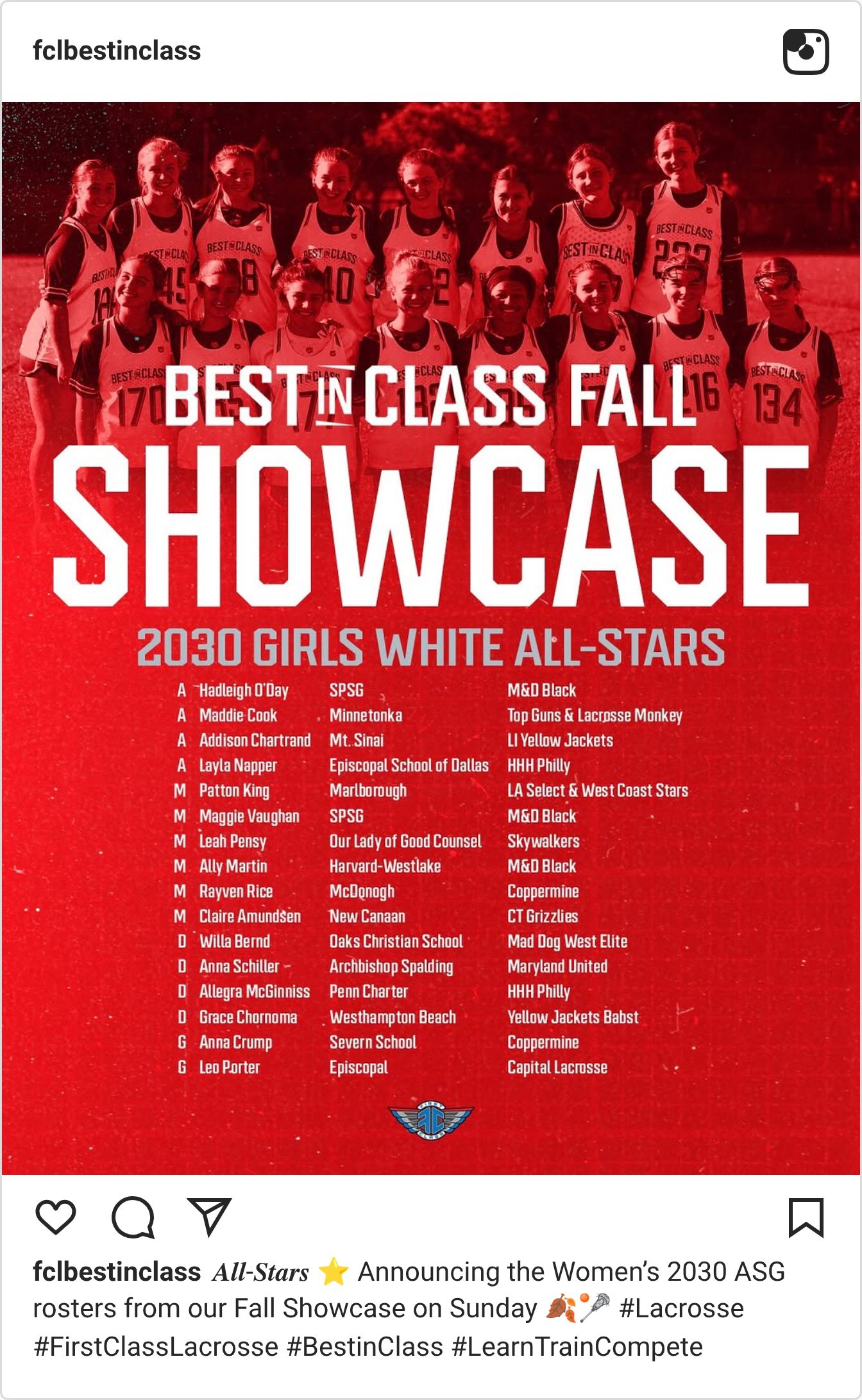
⭐ Best in Class - 2026 Fall Showcase All-Stars
𝑨𝒍𝒍-𝑺𝒕𝒂𝒓𝒔 ⭐️
Check out all of the All-Stars from our Men’s/Women’s Fall Showcase last Sunday in Delaware 🍂🥍
🚀 Online Community
For coaches who want to level up, the FCL Coach Community is the best resource on the market for men’s and women’s coaching staffs looking to continue developing.
It includes over 40 college coach webinars, 150+ drills for offense, defense, and full-team compete, as well as sessions focused on schemes and strategies.

🔦 COMMUNITY TOUR: Watch Community Tour Here.
✍ Coaches Corner Free Newsletter

Every two weeks, we release a newsletter specifically tailored to coaches.
What to expect from the Coaches Corner Newsletter:
Coaching Frameworks: Strategies that actually move the needle.
X’s and O’s: We break down schemes and concepts.
Skill Development: We discuss technique, how to teach it, and drills to rep it.
To check out previous newsletters or to subscribe, you can visit the Full Coaches Corner Archive Here.


